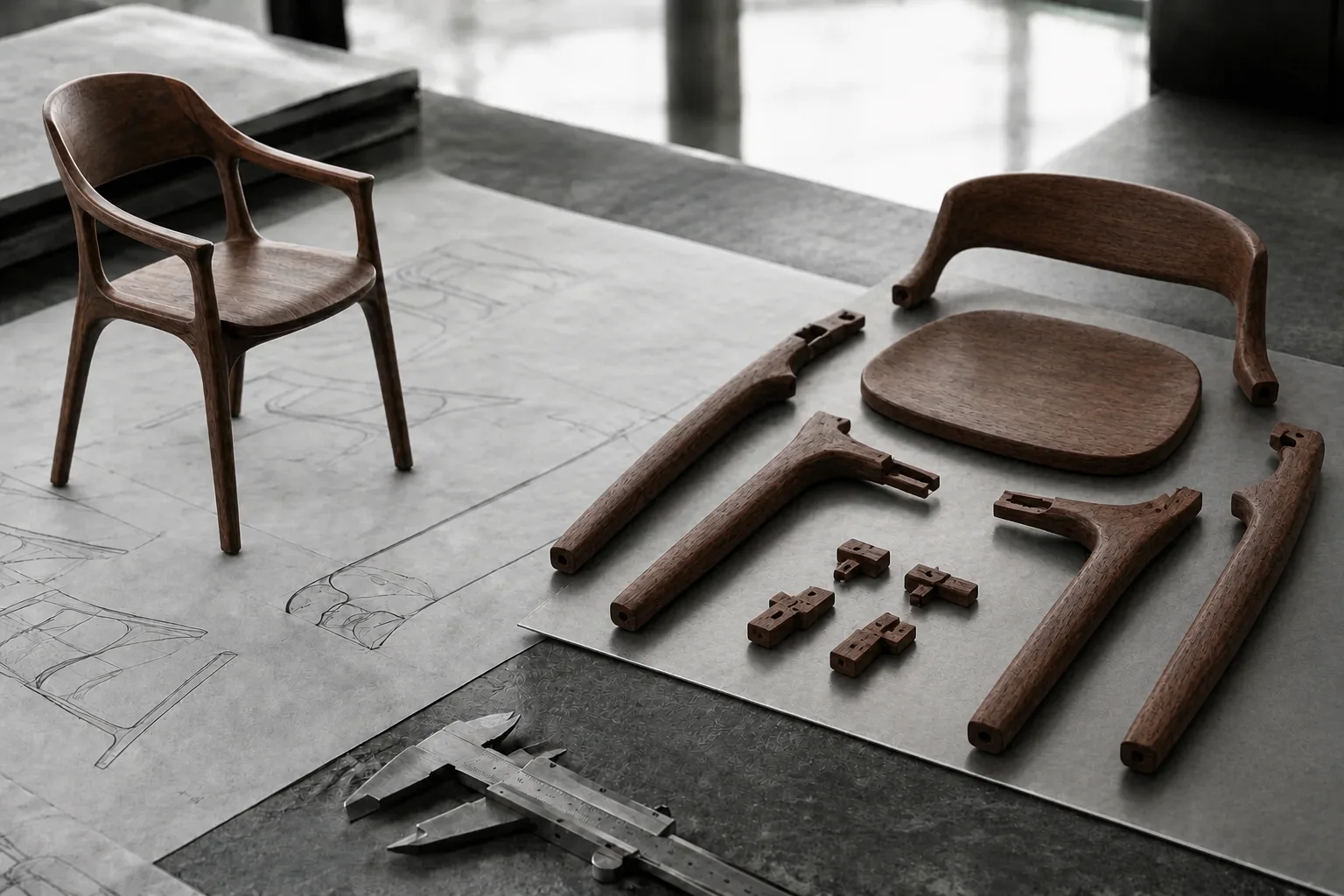
Designing a Chair
A chair is an unusually concentrated design problem. Small changes in angle, height or edge geometry affect comfort, while every visible line may also carry structural work.
Digital Modeling
Surface and solid modeling allow load paths to flow between the seat, back and supports. The goal is not arbitrary complexity. Geometry must be decomposable into manufacturable parts with credible grain direction and joinery.
3D Printed Models
Scale models make silhouette, visual balance and assembly logic easier to judge before valuable material is machined. They do not predict full-scale comfort or strength, but they expose awkward transitions early.
Full-Scale Prototyping
Mock-ups establish seat height, depth, back angle and contact surfaces. Wooden prototypes then reveal machining access, grain continuity, finishing requirements and joint behavior.
CNC, Shaping and Joinery
CNC machining can establish complex reference surfaces; carving, sanding and finishing control the final tactile result. Joinery must transfer loads across components without interrupting the intended form.
Testing and Refinement
Prototypes are refined through measured loading, repeated use and environmental exposure appropriate to their intended setting. Only tested characteristics should become product specifications.